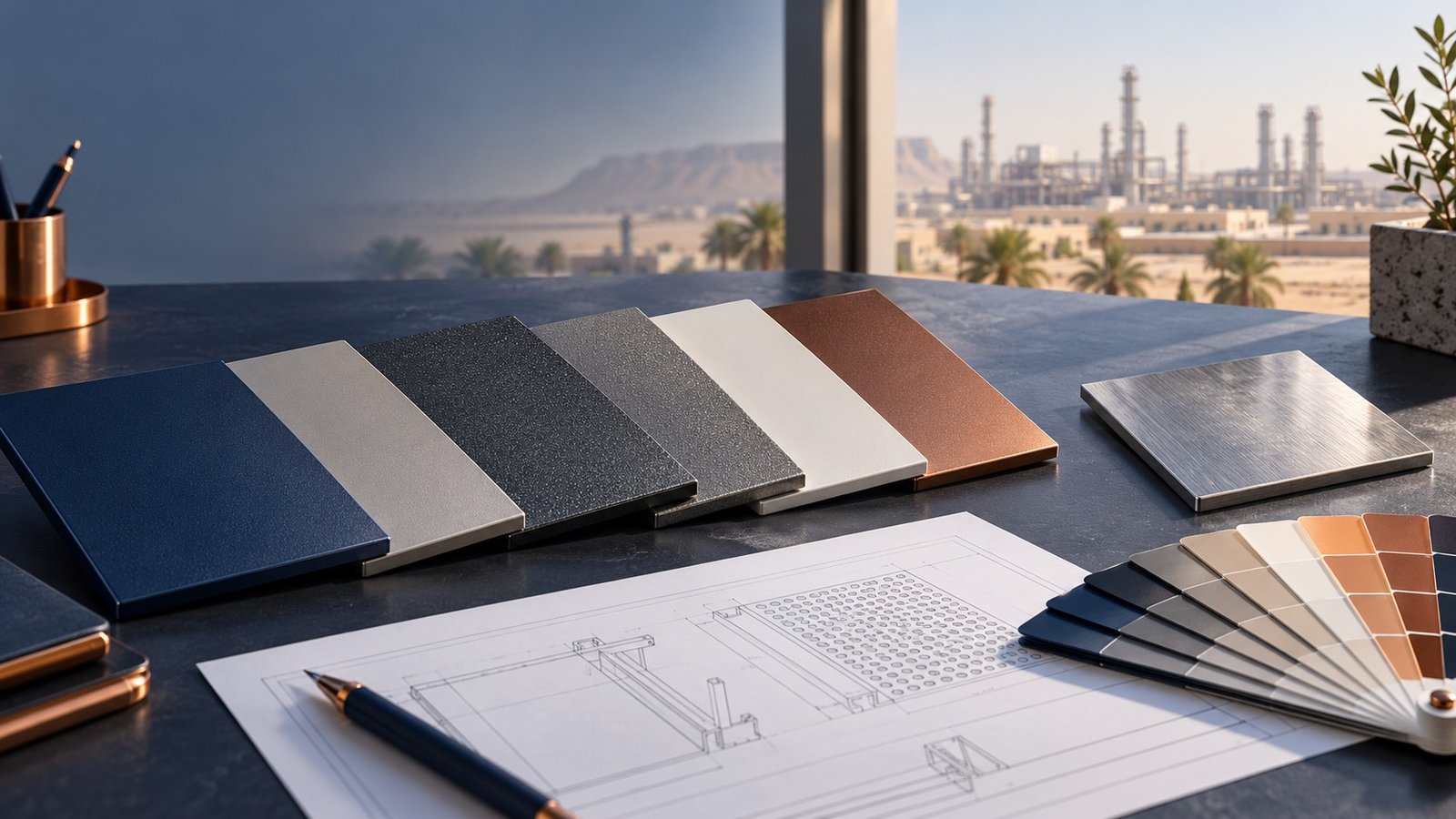

Two quotations can both say “powder coat the steel,” yet describe different jobs. One may include removal of an existing finish and substrate preparation; the other may assume new, clean components ready to hang on a coating line. One may price an interior finish, although the component will stand outdoors near the coast. A unit price is hard to compare until the metal, condition, exposure, appearance, inspection and delivery scope are clear. This guide helps project teams prepare a comparable request for architectural and industrial components. It does not replace the project designer's approved specification or a coater's assessment of the actual parts.
Describe the use and substrate before choosing a colour
State what the component does and where it will be installed: an architectural screen, handrail, lighting-pole component, equipment bracket or industrial assembly. Is it indoors, outdoors or in a coastal setting? Will people touch it, will it be cleaned frequently, or could installation expose edges to damage? These questions inform the preparation and coating system as well as later maintenance. “Outdoor” is only a starting description. Concealed joints, trapped moisture and exposed edges may warrant particular review even when the broad face is easy to inspect.
Identify the substrate and approved grade or specification if known, together with sheet thickness or section size, part dimensions and quantities. Steel, aluminium and galvanized metal do not automatically share one preparation route. Avoid copying a system from a different project because the finish looks similar. If the design team has not settled the substrate or exposure class, request stated options and assumptions for technical review. FLEZCO's powder-coating service page frames the choice around substrate, appearance and exposure rather than one universal finish.
Separate fabrication, preparation and coating
Clarify what arrives at the coater. Are the parts already cut, welded and assembled, or does the quotation include fabrication? Is there fabrication oil, rust, an old coating or a rough weld requiring work? Give photographs and condition notes instead of calling everything “metal parts.” Assign responsibility for stripping any existing finish, cleaning, preparation and review of defects. Identify visible faces, edges, recesses and possible hanging points. Hanging can leave a small contact area; if that area will be prominent, discuss placement before production.
The Powder Coating Institute handbook separates preparation, powder application, curing and quality testing into distinct topics. Merely writing “powder coating” in a purchase order does not define each stage. Ask the proposed coater to describe a route suitable for the actual metal and its condition, with assumptions requiring designer approval called out. Do not prescribe a chemical treatment from a generic article without checking substrate, project requirements and the production process.
Define exposure and the project's performance basis
Tell bidders whether the parts are for interior or exterior use, whether the site is coastal, and whether cleaning, industrial contamination or other project-specific exposure matters. A label such as “exterior grade” is not a promise of a particular service life. Performance depends on preparation, coating selection, part design, handling and maintenance. Attach the project's approved performance specification and its revision if one exists. If none exists, ask for a documented proposal with limits of use for the designer to assess, rather than copying a number from a promotional sheet.
For architectural aluminium extrusions and panels, FGIA explains the 2026 AAMA 2603, 2604 and 2605 editions. Their scope is specific; a steel bracket or an untested coating cannot be declared compliant simply by mentioning a standard. QUALICOAT's specifications likewise describe pretreatment and coating of architectural aluminium. These are references for technical discussion, not a claim that FLEZCO or another bidder holds a certification. Agree the relevant edition, class and evidence with the project specialist when the specification requires them.
Make appearance measurable
Provide a colour reference and say whether the target is a physical control sample or an agreed colour code. “Dark grey” will not settle a disputed shade. Define gloss, texture and any permitted variation if the project already has criteria. Where adjacent components will form one visible elevation, state whether batch-to-batch consistency is an acceptance point. A phone screen is a poor substitute for viewing a real sample under agreed lighting, particularly when texture and gloss influence perception.
Describe the condition of the substrate before finishing. Powder coating does not automatically hide a rough weld or deep scratch. For visible repeated components, consider a first-piece sample that includes edges, joints and the face users will see. Name the reviewer, viewing conditions and sign-off stage before the remaining batch proceeds. An approved appearance sample does not replace performance testing or inspection required by the project specification. Keep the physical or documented reference accessible for later comparison.
Check part design and process suitability
Share current drawings and revision numbers, dimensions, approximate weights if known, hole positions and assembly details. Parts need a suitable hanging, handling and curing route for the chosen system. Heat-sensitive inserts, mixed-material assemblies, enclosed cavities or components already fitted with accessories may require a different sequence or may be unsuitable as supplied. Do not assume that every assembled object can enter an oven unchanged. Obtain a production review before fixing delivery dates or a final unit rate.
Discuss edges, fasteners and joints. Will parts be coated before or after assembly? Are there bearing surfaces, threads or functional dimensions that must be masked? Put masking and contact points on drawings. If a connection has structural or safety implications, the responsible designer must define its requirements. A finish colour cannot answer engineering questions about load paths, fit or access for future maintenance.
Agree inspection and records in advance
Ask bidders to describe the records they will provide under the project requirements: batch identification, material and colour reference, preparation evidence, appearance inspection and any specified test results. “Quality checked” is too vague for an acceptance plan. State what is measured, how samples are selected, the governing acceptance criterion and who signs off. Where a test requires a named method, instrument or laboratory, include that in scope instead of assuming it is bundled into the coating price.
Distinguish approval of a pre-production sample from inspection of production deliveries. Define what happens if a colour variation, damaged edge or other defect is found. Will the part be reprocessed, replaced or reviewed for a specific repair? Do not assume that a local touch-up restores the original appearance or performance without evaluation of the system and location. If the facility will need traceability during maintenance, ask for batch and installation-location records.
Include packing, installation and maintenance
A part can pass factory inspection and then be scratched in stacking, transit or lifting. Specify packing, part labels, the handover point, unloading constraints and responsibility for transport damage. If installation is included, define site access, lifting and interfaces with other trades. If another contractor installs the components, provide handling and cleaning instructions compatible with the approved finish. The quotation should say whether on-site repairs or replacement after installation are excluded.
Ask for care instructions appropriate to the actual coating system and exposure. Cleaning method and frequency vary with the environment and project specification. The supplier should identify cleaning agents or abrasive methods to avoid. Keep obligations for coating, substrate and installation separate in the contract; a broad word such as “warranty” does not establish what each party will remedy. Do not promise a fixed life or maintenance interval without a reviewed project-specific basis.
Compare quotations on one schedule
Use the same comparison headings for every offer: substrate and condition, preparation, proposed coating system, colour, gloss and texture, quantity and part sizes, sample, inspections, packing, freight, installation, exclusions and programme assumptions. A lower price may omit stripping or a control sample; a higher one may include work that was absent from the brief. Ask each bidder to return assumptions in writing. If an alternative system is proposed, keep its price separate from the base-scope price so the technical and commercial differences remain visible.
Send drawings with revisions, a part list, quantities, site location, intended exposure, photographs and the date by which a decision is needed. Mark unresolved items rather than letting bidders silently guess. FLEZCO's enquiry form can receive the package; consult the custom metal fabrication page if the job includes fabrication before finishing. Handle confidential drawings through a channel accepted by your organization. The objective is a consistent scope and an informed approval route, not a guaranteed price before the project details have been checked.
Short answers before the RFQ goes out
Is “exterior powder coating” enough? No. Identify the substrate and exposure, define or seek reviewed options for preparation and coating, and agree appearance, acceptance and maintenance. Can an old coated part be recoated? Possibly, after assessment of the substrate and existing finish; stripping or additional preparation may change scope and cost. Do we need a sample? It can be valuable for visible, repeated work, but its purpose and acceptance criteria belong in the project brief. Does powder coating alone guarantee corrosion protection? No. Consider the complete preparation and coating system, part design, exposure and upkeep.