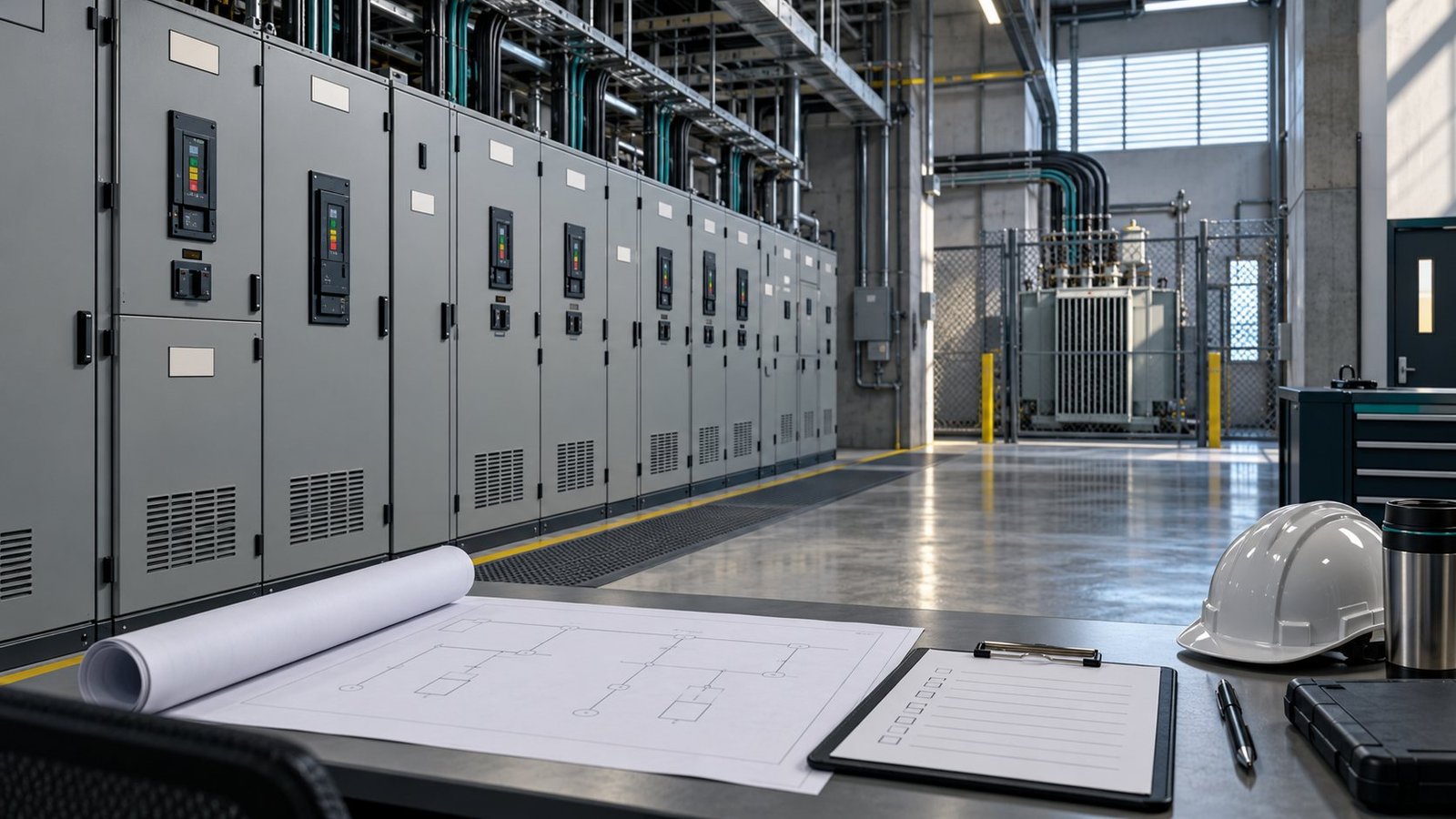

A useful inventory shows what equipment exists, where it is, and how it connects to the rest of the supply system. It helps define a review and maintenance scope; it is not a condition assessment or a substitute for technical inspection. Much of the first pass can come from existing records before a site visit.
Set the inventory boundary
List the buildings and areas in scope, the responsible contact for each, and any equipment managed by another party. Gather available single-line diagrams, asset registers, manufacturer manuals and previous maintenance reports. Record each document's date: changes may not yet be reflected in a drawing. If no diagram exists, note the gap rather than assuming a supply route.
Follow the documented supply path
Start with the supply sources shown in the records, then trace transformers, medium- and low-voltage panels, distribution networks and cables as applicable to the facility. Add earthing and lighting systems, plus a generator or automatic transfer switch if included in the review. Link each asset to its known upstream source and the areas or loads it serves. Mark uncertain connections as “to verify.” A single-line diagram gives a high-level view of components and their relationships, but does not by itself confirm today's installed condition.
Keep a practical record for each asset
An initial row can contain the asset ID or name, location, equipment type and function, available nameplate details, known upstream source and served loads, responsible party, last documented inspection, and a reference document or photograph. Add access limits and the importance of continuity for the served area. Leave unknown fields visibly open; guessed values weaken the review brief.
Separate observations from missing data
Put recorded faults, alarms and earlier recommendations under “documented observations.” Put a missing drawing, asset tag or maintenance record under “data gaps.” A lack of fault reports does not prove condition, and age alone does not establish a repair need. These gaps help qualified personnel decide what needs a site survey or agreed testing.
Turn the inventory into a review request
Share the facility boundary, initial register, records and operating constraints, then ask for a clear list of assets, inspections and deliverables. FLEZCO's electrical infrastructure maintenance service can coordinate scope across transformers, cables, panels, earthing and lighting. If panels are the main concern, see the LV switchboard maintenance-scope guide. Send the available information through the quotation form, and flag anything that may need an initial survey before scope is fixed.
This is a data-preparation guide, not a procedure for opening panels or testing circuits. Qualified personnel must plan site verification and safety arrangements for the actual equipment.